
Developing a culture of debate
At the Élmény Tár, we frequently organise project-based activities for children, which we consider particularly beneficial in the long term, as they enable the children to acquire deeper and more lasting practical knowledge. During these projects, their problem-solving skills develop as they encounter challenges that require creative and logical thinking. Through working together, they also practise teamwork and cooperation, learning how to share tasks and support one another.
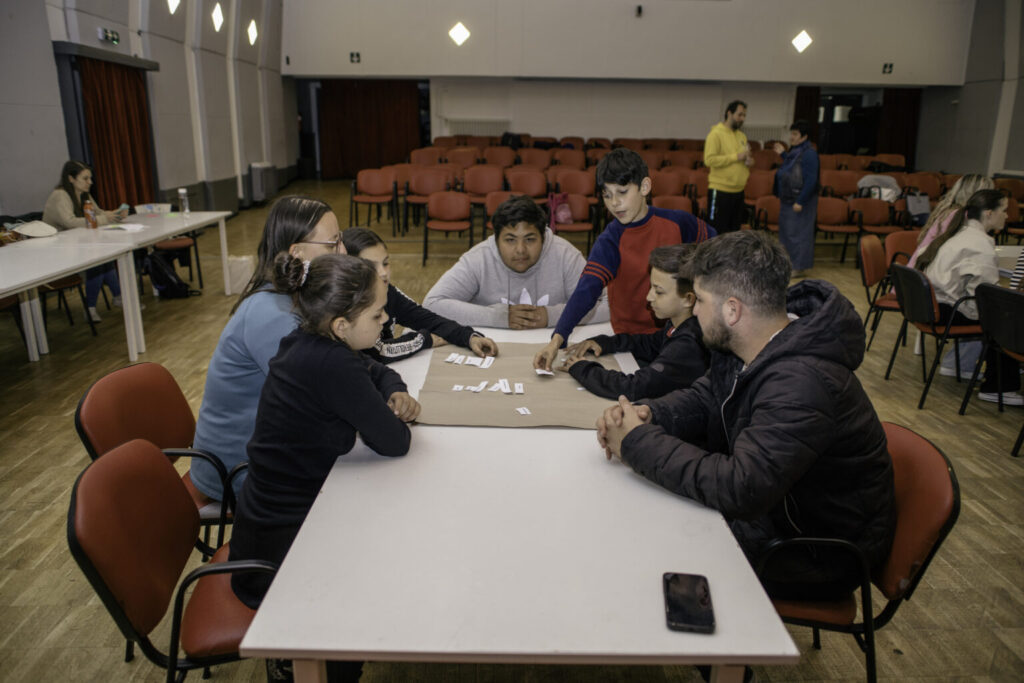
Furthermore, the projects teach them independence and a sense of responsibility, as they make their own decisions and are accountable for their own tasks. The continuous development of these areas enables us to describe ourselves as a democratically run organisation, where partnership is one of the most important values between children and adults. For this, however, it is essential that children are also able to express their opinions and learn to back them up with arguments. Developing a culture of debate plays a key role in this, as it gives them the opportunity to practise reasoning, listen to others’ viewpoints, engage in constructive debate, and participate responsibly in joint decision-making.
In 2022, we joined the Foundation for Democratic Youth: “We’re all in the same boat” – community debate clubs for democracy for his project entitled “.” “The aim of the community debating clubs is to empower young people aged between 11 and 30, ”supporting their involvement at local level, developing social skills and changing attitudes with regard to active citizenship.” In the early days, our organisation prioritised developing young people’s communication and argumentation skills, as well as strengthening their critical thinking. Having mastered these fundamentals, however, we now encourage them to get involved at a local level.
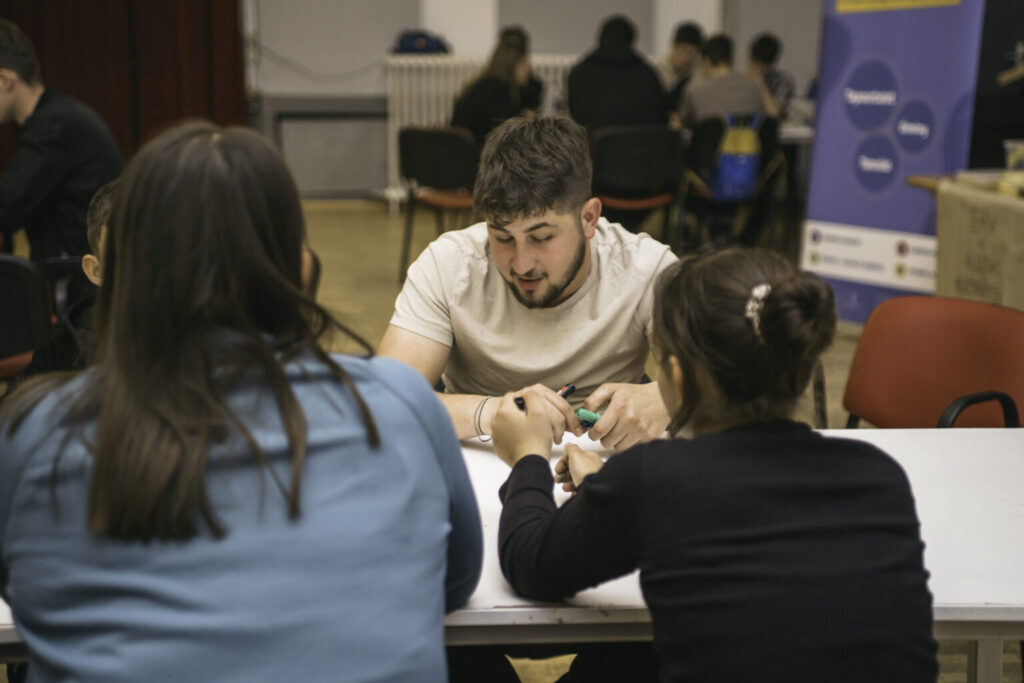
The leader of the Élmény Tár debate club is Ramóna Sütő, and the group consists of eight enthusiastic upper-year pupils. The participants meet twice a month and discuss topics that are currently of interest to the Élmény Tár community. These might include the ingredients for their afternoon snacks, reforming the end-of-day clean-up, or even an issue currently taking place at their school. Our sessions generally follow the same structure: they always begin with a warm-up and end with a wrap-up, to provide participants with a suitable framework for discussion. In the main part of the session, we organise structured debate formats around a pre-determined topic; we have already tried out a great many of these (pair debates, two-corner debates, four-corner debates, cooperative representative debates and round-table debates). The exercises do not focus solely on debating, as we consider it important that our community debate club covers all four core areas defined by DIA, whether within a single session or across separate sessions. In order for the debate in practiceIn order for the forms of debate listed above to emerge and for us to be able to apply them, it is necessary the basis of the debateto understand, for example, how an argument is structured, or what makes a good question. And none of this would work in the debating skills without it, because it is not actually that obvious how you use intonation when speaking in public, or what your body language conveys. For children to be able to practise these things, they need a safe and accepting space. The debating society team They jointly establish the framework and rules, and the facilitator also ensures that a sense of community and safety is maintained through various team-building activities, whilst also helping the group to collectively forge its own identity.
DIA provides ongoing support to debate club facilitators and offers mentoring opportunities, where experienced professionals assist the facilitators in their work, providing them with personalised guidance on how to run debate clubs effectively. In addition, they organise methodological and networking events, during which facilitators can learn about new methods and professional resources, share experiences with one another, and build relationships with other members of the network. It is not only the facilitators who benefit from such great opportunities, but the members too: this is the third time we have taken part in the “We’re All in the Same Boat” summer camp, and we also attend debate events in Budapest or other regions with the children every term.
Of course, as with any project, there are sometimes difficulties here too. The main challenge is maintaining the young people’s motivation, which requires the facilitator to keep up to date with the topics that interest the participants, as well as to be well-versed in methodology and able to link appropriate exercises to each topic. In addition, the varying levels of communication and debating skills among participants from different backgrounds also posed a challenge. It was often difficult to establish the right dynamics among young people arriving with different levels of experience. All these challenges provided us with an opportunity for development, and we now incorporate numerous elements from the debate club into our other activities as well.
We are committed to continuing this important work in the future and to continuing to contribute to the development of a culture of debate!