First regional debate day organised by the Mecseki Kiáltó Regional Debate Centre
On 16 May, we organised the first regional debating day of the Mecseki Kiáltó Regional Debating Centre, which was attended by young people and leaders from four debating clubs in Southern Transdanubia. The primary aim of the meeting was for participants from different towns to get to know one another, build relationships, and experience a safe, collaborative community space where expressing opinions, listening to one another and thinking together are a natural part of how the group functions.
We began the programme with icebreaker and team-building games, which helped the participants to get to know one another in a relaxed atmosphere. The name-learning exercises were followed by an icebreaker bingo game, which not only encouraged communication but also encouraged the young people to step outside their own social circles and strike up conversations with new people. Even in the first hour of the day, it was clear that the initial uncertainty was gradually giving way to openness and curiosity about one another.
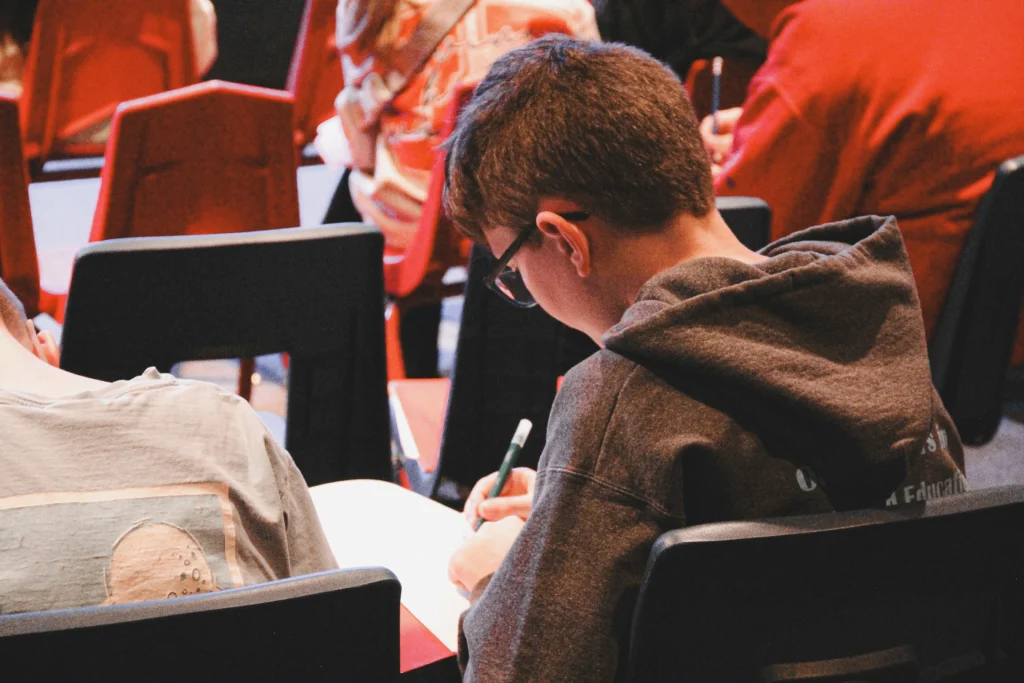
During the morning’s professional session, participants worked together on exercises designed to develop their skills in reasoning, seeking compromise and joint decision-making. The aim of the debates in pairs and small groups was not for anyone to ‘win’ the debate, but for participants to listen to each other’s points of view, formulate arguments and jointly arrive at solutions that everyone could accept. This approach characterised the entire day. The debate was framed not as a competition, but as a collaborative effort.
The afternoon programme centred on a simulation exercise called Paníria. Taking on the roles of residents of an imaginary town, the participants worked to draw up a development plan for their shared community by reconciling the needs of different age groups. During the exercise, participants in the same age group first set out their own needs, and then, in mixed groups, jointly decided which developments would best serve the interests of the community as a whole.
The task provided an excellent opportunity for the young people to experience how, within a community, decisions are rarely made on the basis of a single person’s ideas. Throughout the collaborative thinking process, they had to constantly weigh up different interests, ask each other questions, argue in favour of their own proposals, whilst also reaching compromises. At the end of the programme, each group presented its own town plan, followed by a joint reflective discussion on decision-making processes, different perspectives and experiences of democratic collaboration.
Throughout the day, we paid particular attention to ensuring that the young people not only learnt debating techniques, but also developed their critical thinking, communication skills and competencies relating to democratic participation. The exercises reinforced the idea that their opinions are valuable, their questions are important, and they are capable of actively contributing to shaping their own communities.
The strengthening of regional ties was an equally important outcome. Young people from the various debating societies built new relationships through working on joint tasks, whilst the leaders of the debating societies were given the opportunity to exchange experiences and engage in joint professional discussion. The meeting reaffirmed our objective that the Mecseki Kiáltó Regional Debate Centre should not merely organise programmes, but build a collaborative professional network that supports the long-term development of debate clubs in southernTransdanubia.
We believe that democratic processes can be learnt, and that this requires safe community spaces where young people can experience the power of dialogue, cooperation and shared decision-making. The first regional debate day confirmed to us that there is a genuine need for such events, and that fostering a culture of debate simultaneously strengthens young people’s self-confidence, their sense of community responsibility and their commitment to active citizenship.
The programme was organised as part of the ‘We’re All in the Same Boat’ community debate club run by the Foundation for Democratic Youth.